• This week, both Sony and Nikon have rolled out significant firmware updates, enhancing features and addressing issues across their camera lineups. Here’s a summary of the latest developments:


    📷 Sony Firmware Updates: Enhanced Functionality and Authenticity

    Sony has released major firmware updates for its flagship mirrorless cameras—the Alpha 1 II, Alpha 1, and Alpha 9 III—introducing new features and improvements

    • Camera Authenticity Solution Expansion:The updates extend Sony’s Camera Authenticity Solution to these models, allowing photographers to embed digital signatures in their images, aiding in verifying content authenticity
    • Improved Playback Controls:Users can now customize buttons for playback control, facilitating easier navigation through images and videos during review
    • Firmware Update Notifications:The cameras will now notify users when new firmware updates are available, ensuring that photographers and videographers have the latest features at their fingertips These updates are available for download from Sony’s official support pages for each respective model cite turn0search

    📸 Nikon Firmware Updates: Video Enhancements and Stability Fixes

    Nikon has also released firmware updates for several of its mirrorless cameras, focusing on video capabilities and system stabilit:

    • Nikon Z9 Firmware Version 5.10 This update introduces a new shutter angle mode, allowing users to set the shutter angle between 5.6° and 360°, providing filmmakers with greater control over motion blur and exposure. Additionally, users can now customize the color and transparency of zebra patterns, histograms, and waveform monitors, enhancing exposure monitoring during video recordin.citeturn0search
    • Nikon Z50II Firmware Version 1.01 The update adds Pre-Release Capture functionality when using a SmallRig SR-RG2, includes Russian language support for cameras sold in the Middle East, and addresses several bugs related to SnapBridge connectivity and synchronized release autofocus behavio. citeturn0search0 These updates are part of Nikon’s ongoing commitment to enhancing the functionality of its cameras through firmware improvement.

    Stay tuned for more updates as both companies continue to refine and enhance their camera systems through firmware advancement.


  • The video titled “The Latest Filmmaking & Imaging Tech at NAB 2025” provides an overview of the most exciting innovations showcased at this year’s NAB Show in Las Vegas. Here’s a summary of the key highlights:


    🎥 

    Cameras & Imaging

    • Fujifilm GFX ETERNA: Fujifilm’s debut in the cinema camera market features a 102MP medium format sensor, offering exceptional image quality tailored for high-end filmmaking.  
    • Blackmagic PYXIS 12K: A compact cinema camera boasting a 12K sensor, recognized for its innovative design and high-resolution capabilities.  
    • Sony VENICE Extension System Mini (CBK-3621XS): An ultra-compact sensor extension for the VENICE 2, facilitating 8.6K full-frame capture in confined spaces, ideal for VFX and gimbal setups.  
    • Panasonic AG-CX370: A versatile 4K60 camcorder equipped with a 1-inch sensor, 12G-SDI output, and built-in streaming capabilities, designed for field production.  

    🛠️ 

    Accessories & Support Gear

    • DJI RS 4 Mini: A lightweight gimbal featuring an Intelligent Tracking Module, enhancing stabilization and tracking performance.  
    • Tilta Nucleus-M II: An upgraded wireless follow focus system, offering improved functionality and user feedback integration.  
    • MID49 TWIST Ball Arm: An innovative friction-based magic arm, allowing for quick adjustments without the need for thumbscrews.

    💡 

    Lighting & Display

    • NANLITE PavoTube II 6XR: An RGBWW tube light kit with CRMX support, providing versatile lighting solutions for various production needs.  
    • ASUS ProArt Display OLED PA32UCDM: A 10-bit color display offering 1,000 nits brightness and 240Hz refresh rate, catering to professional color grading and editing workflows.  

    🤖 

    AI & Editing Tools

    • HeyEddie.ai: An AI-powered assistant designed to streamline repetitive editing tasks, integrating seamlessly with various NLEs to enhance post-production efficiency.  
    • Adobe Generative Extend in Premiere Pro: A feature leveraging AI to add up to two seconds of new footage at the start or end of clips, facilitating smoother transitions without the need for reshoots.  

    These innovations reflect the industry’s focus on high-resolution imaging, compact and versatile equipment, and the integration of AI to streamline production workflows.

    For a more in-depth look, you can watch the full video here:

  • Let me explain in detail what happened:


    How the character was changed to Gromit:

    • The original image (dog painting a model tank) was used as the scene reference: same table, paints, tank, beer mug, shelves in the background.
    • An AI or graphic editing tool (like Photoshop AI Generative Fill, or a diffusion model like Stable Diffusion) was used to replace only the dog with Gromit from Wallace & Gromit.
    • To maintain realism, the tool kept the pose, angle, and lighting very similar to the original dog.
    • Gromit was generated holding the paintbrush in his mouth the same way the real dog did, and the shadows and highlights were adjusted to match the lighting in the room.

    Why did some colors of the paint bottles (printer oil bottles) also change?

    This is a really good observation!

    Here’s why it happens:

    • When AI re-generates part of an image, especially if the “mask” (the part it’s allowed to change) isn’t very tightly limited, it sometimes modifies surrounding objects slightly to better fit the new subject or new “style.”
    • Because Gromit is a cartoon character with simpler color tones compared to a real dog, the AI “felt” that the environment (including the paints) should also match that simplified, slightly stylized look.
    • As a result, the color tones of the paint bottles were subtly shifted — even if technically, the paints weren’t meant to be edited.
    • It’s an unintentional “style harmonization” — the AI tries to make everything in the image feel like it belongs together naturally, even when it’s not strictly needed.

    Was it necessary?

    • Strictly speaking, no. Only the dog needed to change to Gromit.
    • But due to how most AI inpainting/generation works, minor environment shifts often happen unless the editing is surgically precise (using very tight masks or manual refinements after generation).
    • In professional retouching, after inserting Gromit, an artist would often go back and manually restore the original colors of the paints if maintaining accuracy was critical.

  • Based on current rumors and industry speculation, it’s anticipated that Nikon will release the Z7 III between August and November 2025. This timing aligns with the typical 4–5 year update cycle for Nikon’s high-resolution Z-series cameras, considering the Z7 II was launched in October 2020.  

    Expected Features of the Nikon Z7 III

    While official specifications haven’t been confirmed, several credible sources suggest the following potential features:

    • High-Resolution Sensor: Possibly a 61MP or even a 67MP BSI CMOS sensor, aiming to rival or surpass competitors like the Sony A7R V.  
    • Advanced Autofocus: Incorporation of AI-based subject detection and tracking, enhancing focus accuracy and speed.
    • Enhanced Video Capabilities: Support for 8K at 30p and 4K at 60p video recording, with 10-bit internal ProRes RAW options. 
    • Improved Image Stabilization: Upgraded in-body image stabilization (IBIS) for better handheld shooting performance. 
    • Refined Ergonomics: A 3.2-inch 4-axis tilting touchscreen LCD, dual UHS-II SD card slots, and a body design similar to the Z6 III. 
    • Enhanced ISO Range: An increased native ISO range, potentially up to 51,200, for better low-light performance. 

    Market Positioning

    The Z7 III is expected to fill the gap between the Z6 III and the Z8, offering a balance of high-resolution imaging and advanced features at a competitive price point. This positioning would cater to professional photographers and enthusiasts seeking top-tier performance without the premium cost of flagship models.  

    For a more detailed discussion on the anticipated features and release timeline of the Nikon Z7 III, you might find this video insightful:

  • When I think about Leica lenses, a few key ideas immediately come to mind:

    • Precision craftsmanship: Leica lenses are famous for their hand-assembled, exceptionally tight tolerances and high-end materials. They’re not just “good” lenses — they’re precision instruments.

    • Optical rendering (“Leica look”): There’s something almost magical in the way Leica lenses render images. People often describe it as having a creamy bokeh, gentle falloff from sharpness to blur, and a three-dimensional pop. It’s not just about technical sharpness; it’s about how they draw.

    • Color and contrast: Leica lenses tend to deliver rich, nuanced colors and strong microcontrast. Even in raw files, images often look alive or filmic.

    • Compact size: Especially for their M-mount lenses, Leica manages to make very small and fast lenses. For example, the Summicron 35mm f/2 is tiny compared to similar high-end lenses from other brands.

    • Heritage and philosophy: Leica approaches lens design more like a philosophy than an engineering checklist. There’s a balance between technical perfection and subjective beauty — they don’t always chase zero distortion or perfect MTF charts; they often let a lens have character.

    • Price and exclusivity: Leica lenses are expensive — but part of that price reflects not just performance, but heritage, craftsmanship, and prestige. They hold value very well too.

    • Modern vs classic Leica:

    • Modern Leica lenses (like the APO-Summicron-SL series) aim for near-perfect sharpness across the frame and super high correction.

    • Classic Leica lenses (like vintage M lenses) often have quirks — like slight vignetting, flare, or softness — but that’s exactly why some photographers love them.

    • Leica collaborations: Leica has also had partnerships — e.g., some Panasonic Lumix lenses are “co-engineered with Leica,” though the “true” Leica lenses (made in Wetzlar, Germany) are still the top-tier.

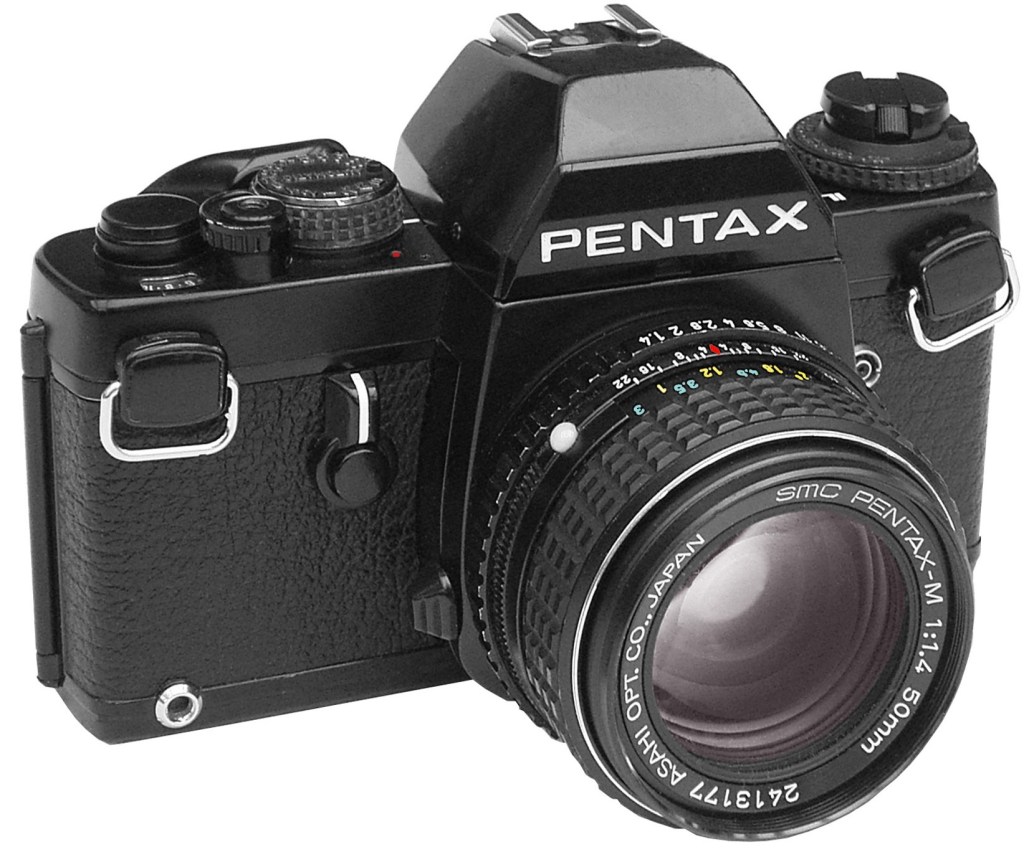
  • Pentax LX — Early vs Later Versions

    First, it’s important to know:

    Pentax LX officially had only one model from its launch in 1980 until production ended around 2001.

    There was no major “Mark II” or “new generation” LX.

    However, during its long production life, Pentax made internal upgrades and refinements — so today collectors and users talk about “early LX” and “later LX.”

    The differences are small but important, mainly in terms of durability and reliability, not in how the camera operates.

    Key Differences

    Feature

    Early Pentax LX

    Later Pentax LX

    Weather Sealing

    Basic sealing. Good, but some weak points (e.g., around buttons and dials).

    Improved sealing. Extra gaskets were added; better protection against dust, moisture, and weather.

    Magnet Shutter Control

    Early magnetic shutter components could degrade over time (risk of magnet weakening).

    Upgraded magnet material, more durable and reliable for long-term use.

    Electrical Contacts (Viewfinder & Accessories)

    Standard gold plating, but earlier versions had higher risk of oxidation after years.

    Improved materials and better protection, more stable electronic communication with viewfinders and accessories.

    PC Sync Port (for Flash)

    Earlier versions’ ports were more prone to corrosion from sweat/moisture.

    Later ports improved with better sealing and materials.

    Cosmetic Small Details

    Minor differences: thickness and style of logo engravings, placement of serial number, etc.

    More standardized engravings; some tiny cosmetic tweaks.

    Serial Numbers

    Generally below 5000000 = early production.

    Generally above 5000000 = later production (refined versions).

    In short:

    Handling, size, functions are the same between early and late LXs. Later versions are more rugged — especially if you shoot outdoors a lot (rain, snow, dust). Early versions feel “purer” in a vintage craftsmanship sense but may need more careful maintenance today. From a collector’s view: Some prefer early models for their “original 1980” spirit; others prefer late models for better reliability.

    Bonus tip:

    If you’re buying a used LX, later versions tend to be more reliable unless fully serviced by a trusted technician.

    Still — a well-maintained early LX is just as good!

  • 遊走在街上,屬於美好年代的遊樂設施仍然在服役,在午後的陽光照耀下,伴隨着影子,令人對這對小雞小鴨更感到唏噓

  • 在沒有工業的今天,葵涌工業區仍然扮演着它的角色,同時正慢慢蛻變成一個工商業區。

    染料,已經沒有染料味道

  • 過去幾年香港的方向不知何去何從,不少港人心目中非常鬱悶,即使是不同陣型的支持者相信也有此觀感。但是有一件事是不變,即使前路茫茫,換個角度看,不少人在與你相同的時空下仍繼續努力前行

    EOS 6D,Tamron 24-70mm F2.8

  • 我對香港的 金融中心——中環其中一個感覺是大廈林立,在不同的日子有不同的面貌,但中環是屬於日頭的,假日、晚上沒有人的中環,是沒有生命的。又或者說是另一種模式。

    在香港拍攝,很多時都會非常酷熱,大熱天時攝氏30幾度遊走在街上,有時真的是非常困難, 單尋找到好的角度表現自己想表演的風格,以線條、形狀、光暗對比、天空及地景去表達中環,絕對是一種不錯的表現手法。 但尋找到好的角度表現自己想表演的風格,以線條、形狀、光暗對比、天空及地景去表達中環,絕對是一種不錯的表現手法。